🍫 JabCon 2026 - Release JabRef 6.0 beta 🍯
From Friday, September 4th, to Thursday, September 10th, 2026, the annual JabCon took place in Sindelfingen, Germany, where the majority of the JabRef maintainers, members, and friends of our non-profit organization JabRef e.V. met in person and worked together to improve JabRef and discuss the roadmap for future releases.
We are happy to announce the release of JabRef 6.0-beta, which includes several new features and improvements, and at the same time take the opportunity to celebrate 1,000+ contributors and 4,700+ stars on GitHub. 🎉
You can download the latest beta from GitHub. But please remember to make a backup of your files before testing a beta release.
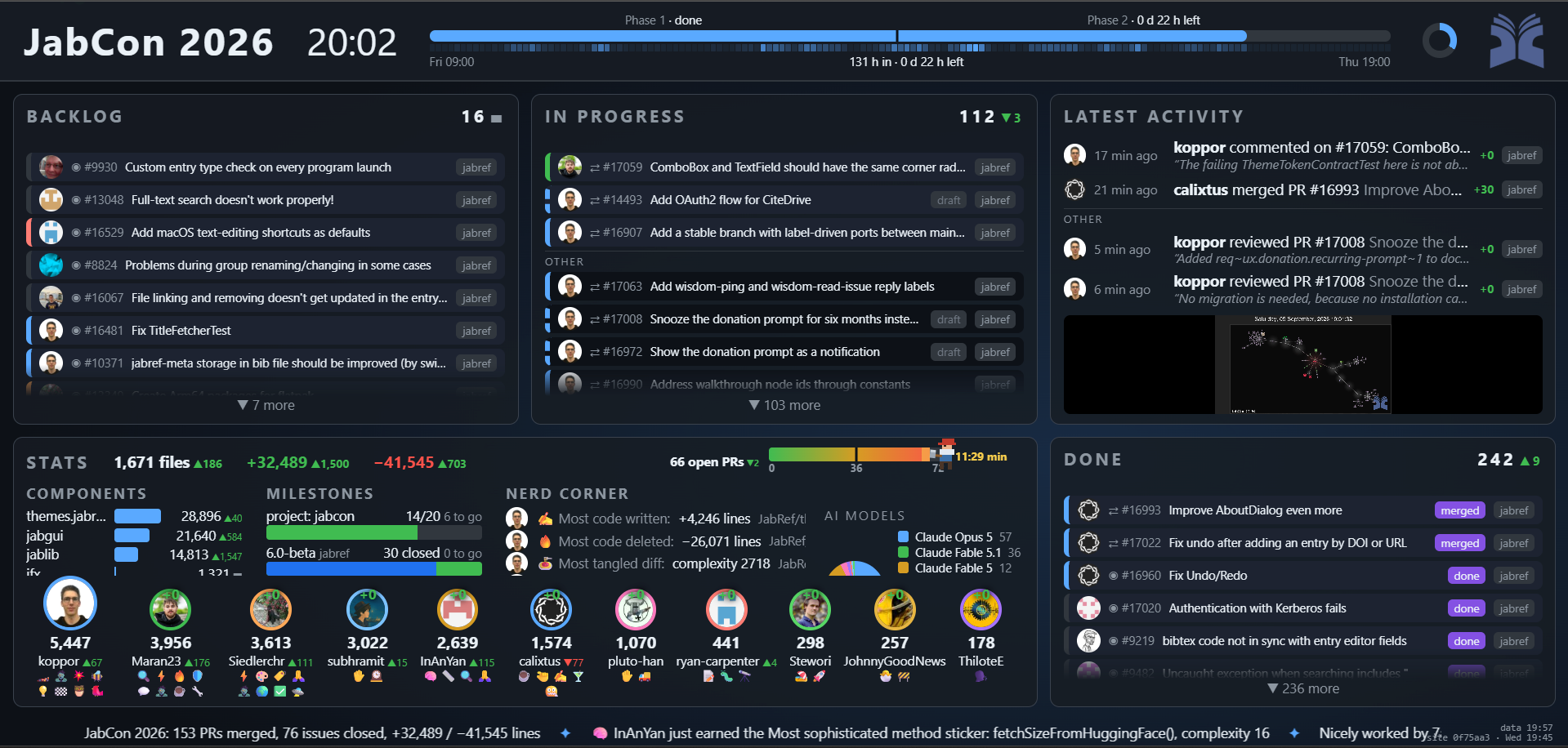
This year we focused on preparing the 6.0-beta release and fixing release-critical issues. As you can see in our JabCon dashboard, we achieved significant progress in these areas.
Key Highlights
Revamped Entry Editor
We revamped the entry editor to provide a more intuitive and user-friendly interface, especially the Main tab
The new unified “Main” tab brings an entry’s fields, files, identifiers, comments, and metadata into one streamlined view—alongside faster ways to add entries from URLs and navigate directly to fields.
Improved Library Management and Collaboration
The revamped shared database feature with PostgreSQL now allows a smoother collaboration and synchronization of bibliographic data across multiple users and devices. However, as currently, only PostgreSQL supports a push-based system, we dropped support for mySQL as this would have made the synchronization harder.
For a while the JabRef 6.0 alphas shipped with experimental Git support as a use case for collaboration and version control. In this new beta version the Git support becomes more practical with semantic diffs, one-click commit-and-push, automatic Git actions, and safer commits.
New Theming System
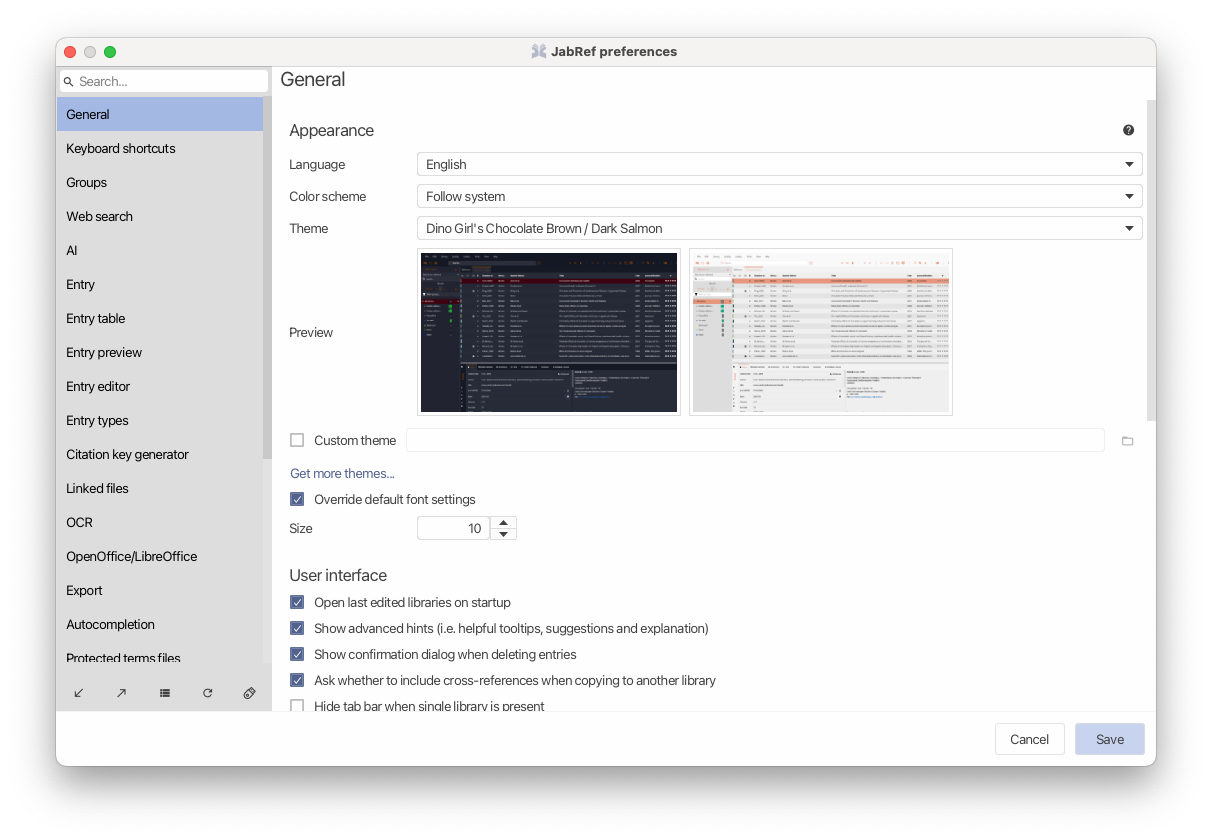
We have introduced a new theming system that allows users to customize the look and feel of JabRef to their liking. This system provides a wide range of options for colors, fonts, and other visual elements, making JabRef more visually appealing and easier to use.
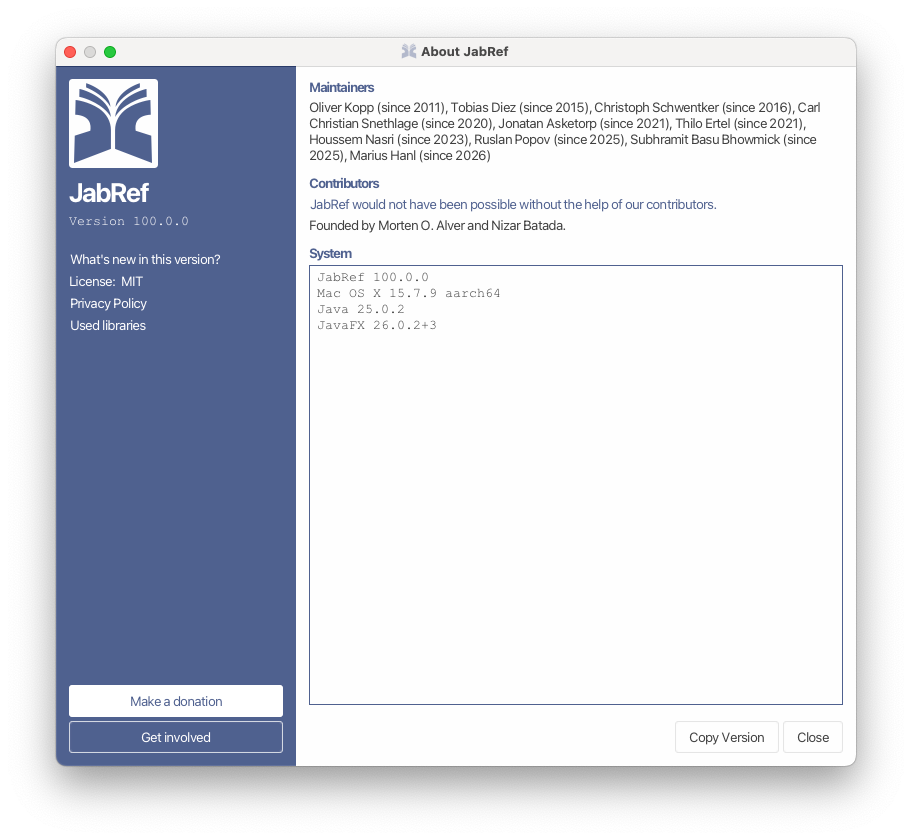
This also led to the overhaul of the “About JabRef” dialog, which changed a couple of times over the 20 years of JabRef. We now acknowledge again the founders of JabRef as without them, we would not be here today releasing a new version!
A while ago the user Dino Girl spent some great effort in creating some fancy-colored themes for JabRef, and we honor their work by shipping them now with JabRef. With the new theming system you can now independently change the color scheme of the theme as well.
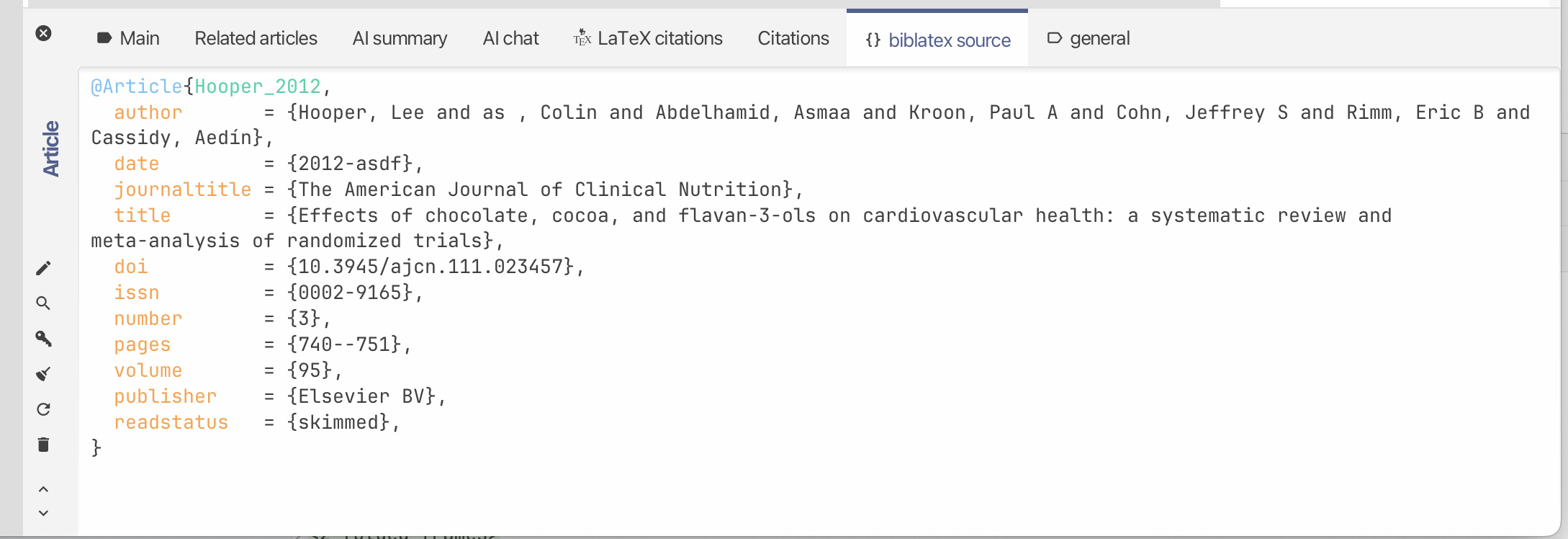
The BibTeX editor now has proper syntax highlighting, making it easier to read and edit complex BibTeX entries.
Check out our custom-theme page repo for a gallery of themes and updates to existing themes.
Performance Improvements
Over the last months we measured and successfully improved the performance of JabRef, especially when dealing with large libraries and many groups. This also applies to the startup of JabRef and also has a positive impact of the shared database feature, making collaboration now even smoother.
GSoC
The Google Summer of Code (GSoC) program has been a great success for JabRef, with several students contributing valuable features and improvements to the software.
LibreOffice Improvements and Zotero Compatibility
One of this year’s GSoC projects by Hancong focused on enabling compatibility between JabRef’s LibreOffice integration and Zotero’s plugin - they can now read each other’s citations!
Other major improvements include support for Track Changes mode, .bst bibliography generation, richer “Cite special” options, and more reliable CSL citation formatting and ordering. Read more in the blog post Improved LibreOffice Integration.
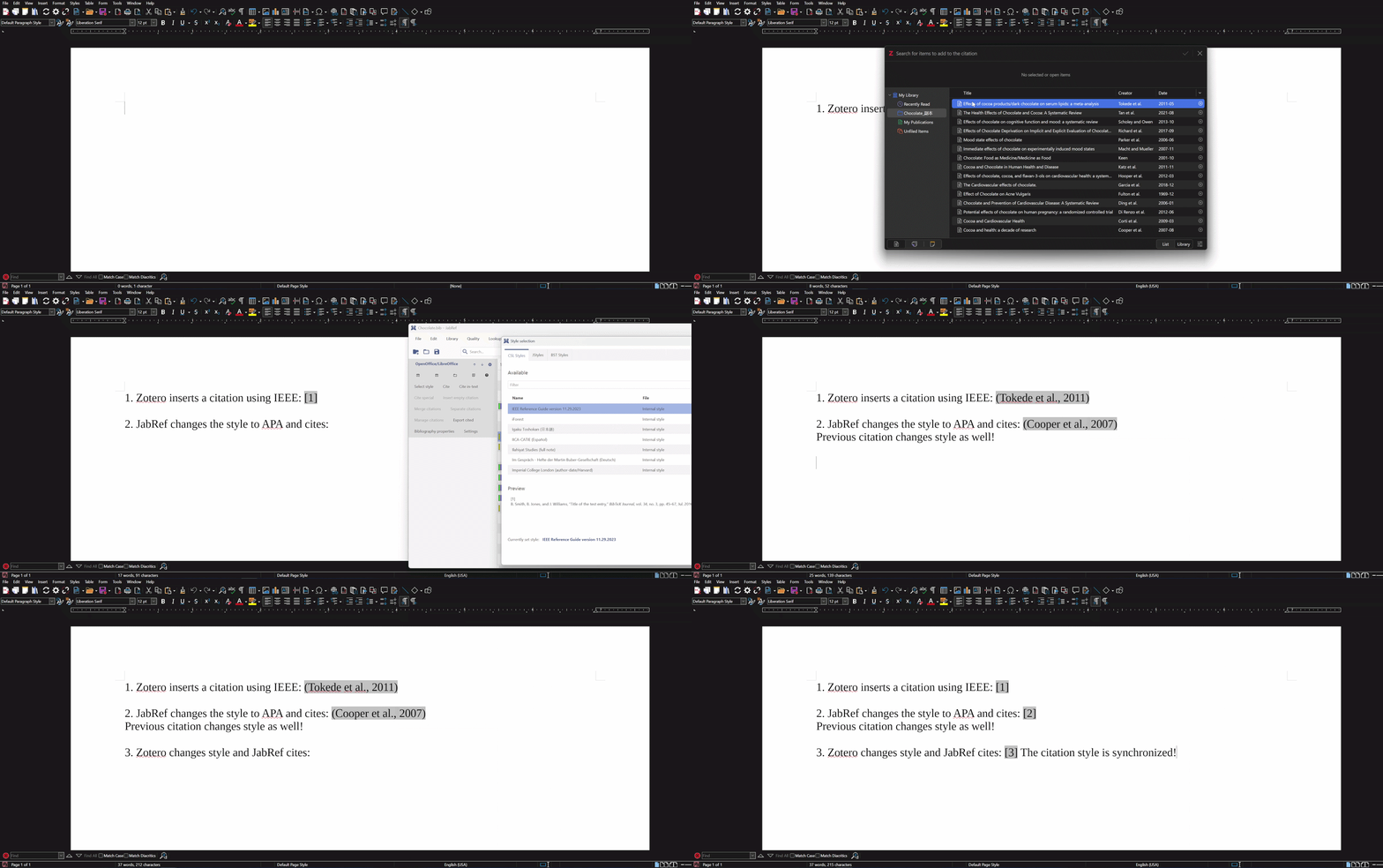
LaTeX users might also appreciate the new bst-Style support. For a while JabRef could already parse and render .bst (BibTeX-Style) files, allowing users to have previews that resemble the output of the rendered bibliography in their LaTeX document. These .bst Styles can now also be used in LibreOffice bibliographies, providing the same style as in your LaTeX document.
OCR Integration
Frequent blog post readers will already know that this release includes a new OCR feature which was a GSoC project by Zeyad.
The OCR feature allows using an external OCR tool to extract fulltext from scanned PDFs. Currently, we support Docling and OCRmyPDF.
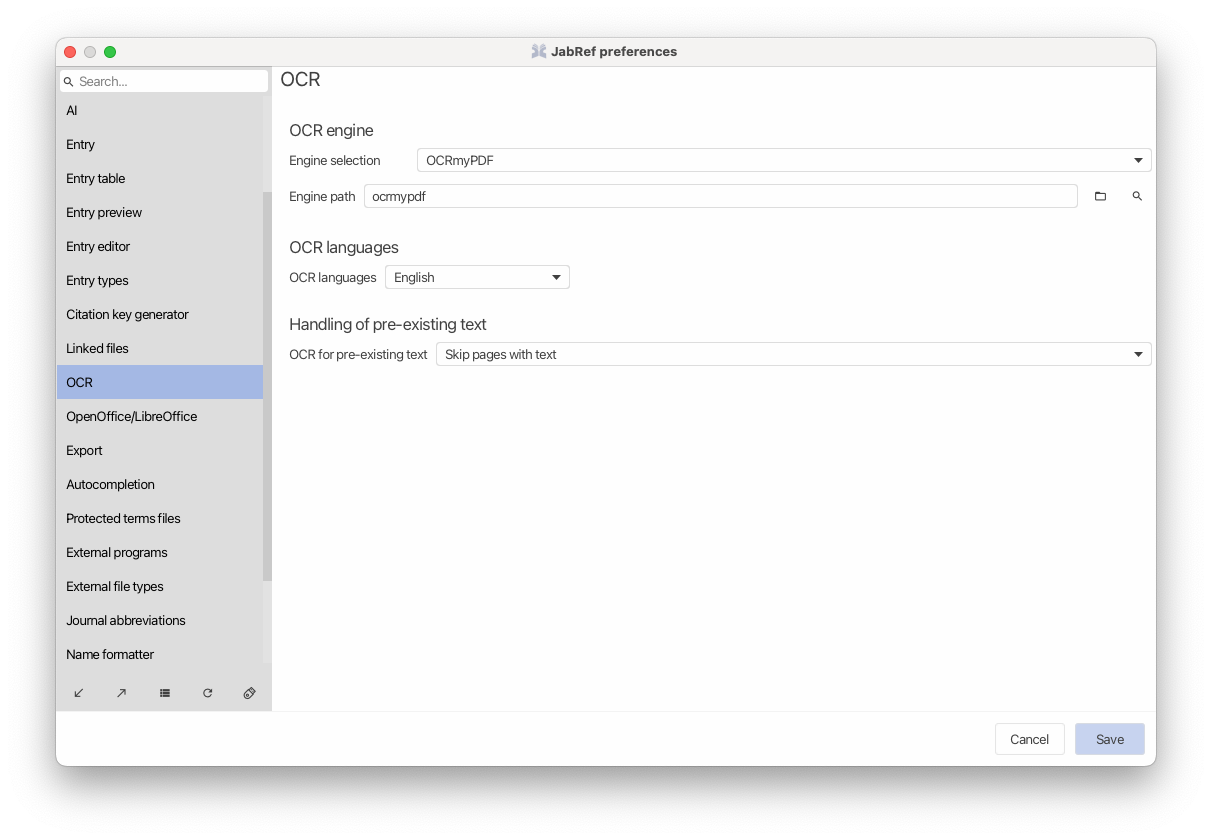
Once the fulltext is extracted, it is then added to JabRef’s fulltext indexer and available in JabRef’s fulltext search as well. Additional information is present in the blog post OCR integration.
SLR, Fetcher, and Importer improvements
This summer we also had Faneesh and Loay who worked on improving JabRef’s support for systematic literature reviews (SLRs) and fetchers. Their work has greatly improved JabRef’s ability to retrieve and manage bibliographic data. One of the new features is the possibility to define native queries for SLRs. For more details refer to the blog post Systematic Literature Reviews in JabRef
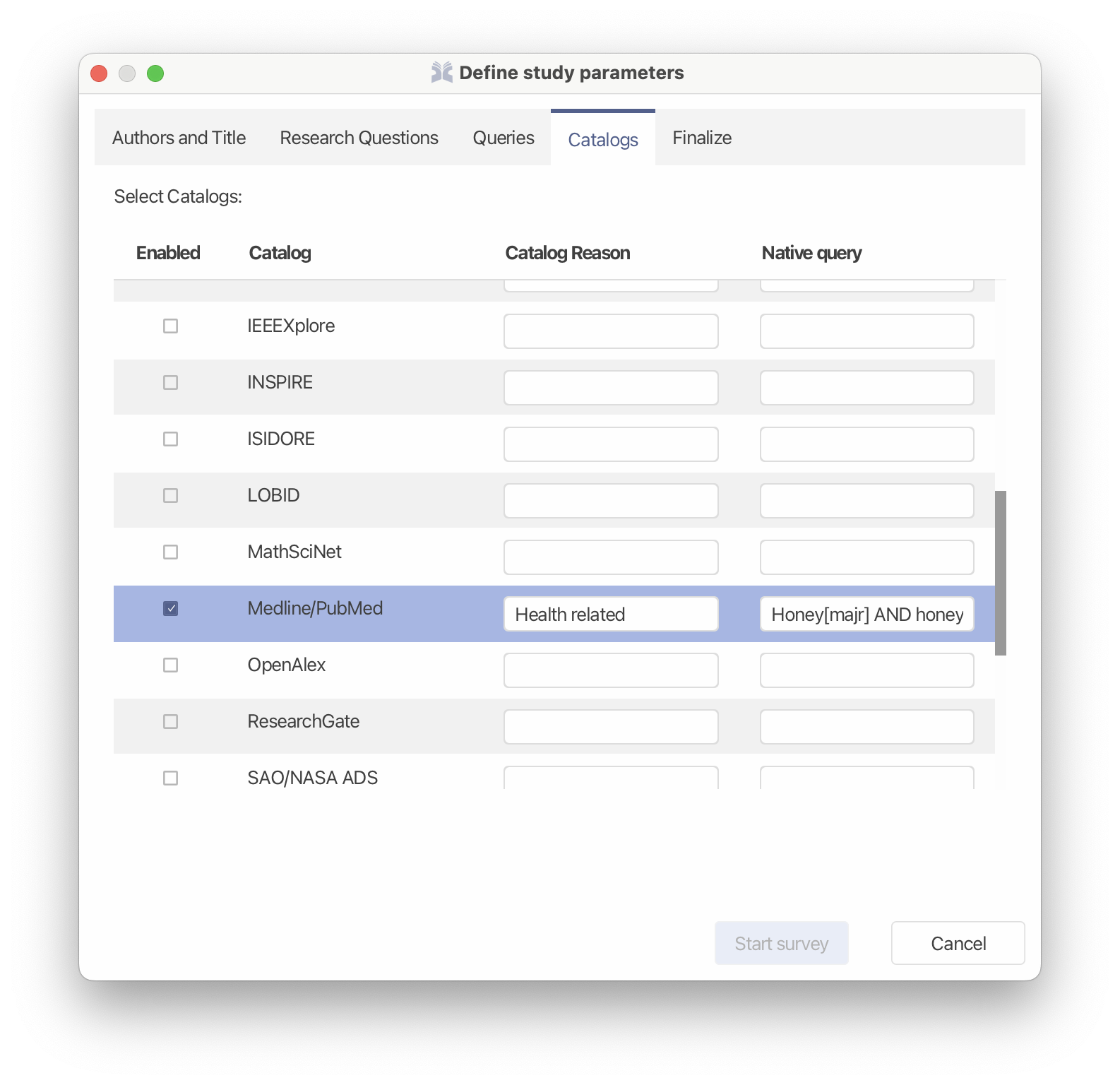
During the work on SLR, the fetchers in JabRef were also improved and new fetchers were added, for example, BieleFeld Academic Search Engine and German National Bibliography. The latter one is also used as a source for ISBN lookup. JabRef now also can import and export the Hayagriva file format from the Typst bibliography manager. In addition, there is now also a generic CSV exporter that simply exports all fields and content of a BibEntry to a CSV file.
Undo-Redo Unification
As a user you expect undo and redo to work out of the box and do not usually think about it. However, in JabRef we found some related issues to this which degraded the user experience. Over the last months we worked hard to unify the Undo and Redo implementations and fix bugs along the way to ensure a smoother user experience.
JavaFX improvements
A more technical detail, but JabRef uses JavaFX for its user interface, and during the JabCon, Marius Hanl worked on improving the theming system in JabRef and fixed bugs in the JavaFX framework that were discovered by the JabRef team over the last years. The changes in JavaFX will benefit all developers and improve the future user experience of JavaFX-based applications.
Special Thanks
We want to thank all the users who are constantly testing the latest snapshots and providing feedback! Furthermore, we would like to thank our donators and JabRef e.V. members who made it possible for many JabRef developers to attend the conference and to support our work. In case you like to donate money regularly, we would prefer via our bank account (tax-deductible and no fees) or via GitHub Sponsors as the fees are lower than PayPal. Of course, we also want to thank Google for providing the opportunity for JabRef to participate in GSoC.
We would like to thank all the students who participated in GSoC and made JabRef a better tool for everyone. Even more impressive is that participants took on the odyssey with Deutsche Bahn and traveled to JabCon 2026 from the Netherlands and Switzerland. They all arrived safely…;)
We are excited for next year’s JabCon, GSoC (if we get accepted again) and will be heading to the next JabRef release!
Collaborations
As you might have noticed as a contributor, since a while we have officially collaborated with APIdia which provides a unique way to browse Javadoc of JabRef and its dependencies.
We thank all the external contributors who contributed code to this JabRef release.


